

While retail store closures have become increasingly common in recent years, gas stations have remained relatively resilient. Steady demand for transportation, despite economic uncertainty and more cautious consumer spending, has continued to support the industry.
However, rising geopolitical tensions have pushed fuel prices higher in 2026, increasing costs for both consumers and operators. For gas stations, which already operate on thin margins, these pressures are particularly significant.
Now, a popular 44-year-old mega-gas station chain with a decades-long record of stability is closing a location after more than 25 years in operation.
Buc-ee’s is closing a Texas location
Buc-ee’s has confirmed it will close its Port Lavaca, Texas, location. Unlike the brand’s typical large-format travel centers, this site is one of its smaller, older stores, making it less aligned with the company’s current expansion model.
The property is not expected to remain vacant for long. Local officials told the Victoria Advocate that the site will likely be converted into a 7-Eleven featuring a Laredo Taco Company. While permits for the transition have been filed, a construction timeline has not yet been disclosed, and no building permits have been submitted.
The Buc-ee’s closure doesn’t appear to be due to financial struggles, but rather to the company shifting its operating model toward larger travel centers in higher-volume areas.
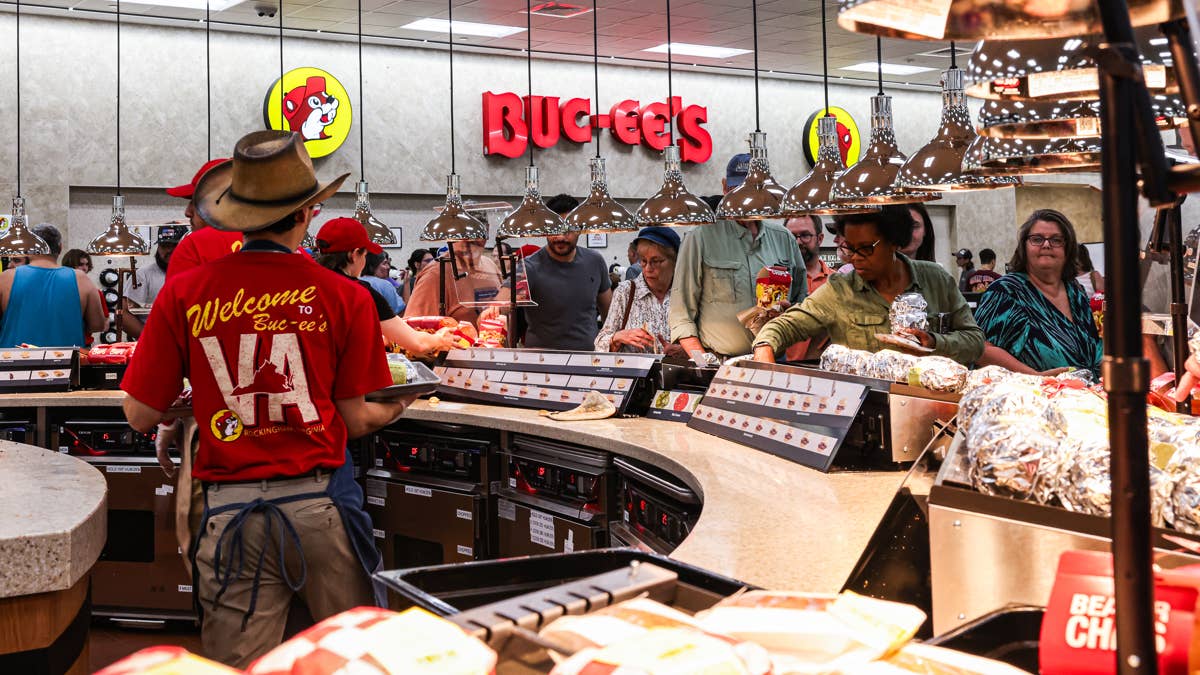
Valerie Plesch/For The Washington Post via Getty Images
What sets Buc-ee’s apart
Founded in 1982, Buc-ee’s built a strong reputation as a Texas-based chain of large-scale travel centers. The company operates nearly 70 locations across 11 states, according to its store locator.
Its locations are designed as destination stops rather than traditional gas stations. In addition to dozens of gas pumps and electric vehicle chargers, Buc-ee’s stores feature expansive retail spaces offering fresh food, snacks, apparel, home goods, and branded merchandise.
More coverage on Buc-ee’s business:
- Iconic convenience store chain shares growth plans (here’s where)
- Starbucks rival launches coffee shops in cult favorite chain
The brand is also widely recognized for maintaining exceptionally clean restrooms, an operational standard that has become a defining part of its identity and customer loyalty.
For many road-tripping families, commuters, and long-haul truck drivers, Buc-ee’s has become a dependable and often preferred stop.
Convenience-store competition in the Texas market
Despite its smaller footprint, Buc-ee’s remains a major competitor in Texas, particularly against 7-Eleven.
7-Eleven operates more than 86,000 stores globally and maintains a strong presence in Texas, where its North American headquarters are located. The state also has the highest concentration of 7-Eleven locations in the U.S.
Meanwhile, Buc-ee’s has focused heavily on Texas, with more than half of its locations in the state. Texas’s size, car-centric infrastructure, and culture of long-distance driving make it one of the most competitive and strategically important markets for travel centers.
7-Eleven continues restructuring
7-Eleven’s parent company, Seven & i Holdings, recently announced plans to close 645 stores across North America during fiscal 2026, according to its fourth-quarter earnings report for fiscal 2025.
While the company also plans to open 205 locations, this marks the fifth consecutive year closures have outpaced openings.
Not all closures involve full shutdowns. Some locations are being converted into wholesale fuel sites, where fuel sales continue, but retail operations are reduced or eliminated.
This move allows 7-Eleven to access lower bulk prices, reduce operating costs, and ensure supply stability at underperforming locations, according to Premier Petroleum experts.
Buc-ee’s closures remain rare
In contrast, Buc-ee’s has historically avoided closures, focusing instead on expansion.
The company recently entered several new states, including Arizona, Arkansas, Kansas, Louisiana, Nebraska, North Carolina, Ohio, and Wisconsin, while continuing to grow in existing markets, Fast Company reported.
Notably, Buc-ee’s has lost only one location under unusual circumstances. Its original Luling, Texas, store accidentally burned down in 2024 amid demolition ahead of a planned replacement with a larger site nearby, KBTX reported.
That makes the Port Lavaca closure an outlier, and a potential signal of the company’s ongoing shift away from smaller, legacy locations toward its now-standard large travel center format.
Rising oil prices add pressure
Oil prices have surged more than 40% since the start of the Iran war, following U.S. and Israeli strikes on Iran that began on Feb. 28, 2026, Fox Business reported. The increase has pushed fuel costs higher for both consumers and gas station operators.
According to industry data from Gas Station Equipment, fuel sales typically generate margins of just 1% to 3% per gallon after accounting for wholesale costs, taxes, and transportation expenses.
More coverage on the Iran war:
- Apple closes all stores in fast-growing market
- Shipping costs surge as fuel prices hit near-record highs
As a result, many operators rely heavily on in-store purchases, food service, and additional amenities to maintain profitability.
“Good cost control and a diversity of services are agents to be reckoned with for a gas station struggling with unpredictable fuel prices and a burdensome cost setup,” said Gas Station Equipment industry experts.
What Buc-ee’s closure means for the future of gas stations
While a single-store closure may appear minor, it underscores the growing importance of scale and the pressure on smaller-format locations, two major shifts in the industry.
For Buc-ee’s, the move reinforces its strategy of investing in large, high-traffic travel centers that maximize both fuel and in-store revenue.
For competitors such as 7-Eleven, it highlights a parallel effort to streamline operations and focus on the most profitable formats.
As fuel price volatility and operating costs continue to rise, even well-established brands are being forced to redefine their footprints, suggesting that size, efficiency, and diversification will play an increasingly central role in the future of roadside retail.
Related: 39-year-old grocery chain closing 17 stores in 2026