

Seemingly every day, one side issues a new threat against the other, so as it enters its fourth week, the Iran-U.S.-Israel war doesn’t appear to be ending anytime soon.
This week, U.S. President Donald Trump drew a line in the sand, warning Israel not to repeat its attacks on Iran’s natural gas infrastructure after it bombed one of Iran’s major gas fields. Iran responded by bombing Qatar’s Ras Laffan Industrial City, which processes about a fifth of the world’s liquefied natural gas.
Despite the president’s claim that he told Israeli President Benjamin Netanyahu, “I told him, ‘Don’t do that’, and he won’t do that,” the escalation represents a turning point in the war that could do major damage to the domestic economy.
“The spike in oil and gas prices due to the conflict in the Middle East challenges our optimistic outlook for the U.S. economy, yet we see underlying resilience,” said Andrew Husby, senior economist at BNP Paribas, in a recent note reviewed by TheStreet.
In recent years, the U.S. has become a net exporter of energy products, a fact that the firm says will help mitigate the direct negative impact of rising prices on economic growth.
The U.S. economy is well-positioned to withstand oil shock, says BNP Paribas
Brent crude oil hit an all-time high of $147 in 2008, rising from about $30 a barrel in 2003 to more than $100 by early 2008, reportedly spurred by increased demand from China, according to Trading Economics. But just as abruptly, Brent prices fell back down to earth, only breaking $100 per barrel again in 2022 during the Covid pandemic.
Though analysts at BNP Paribas say a prolonged shock with a moderate price rise would “probably” prompt minor adjustments to its growth outlook, the firm is still bullish on the U.S. economy.
“We see the US economy as well-positioned to absorb the shock, as it is now the world’s largest producer of crude and a net energy exporter. The sensitivity of the economy to changes in oil prices has fallen, while monetary and fiscal policies ex-tariffs appear stimulative,” Husby said.
BNP has had an above-consensus view of the U.S. economy for some time, saying it takes a “glass-half-full” view of the job market and expects the unemployment rate to hold at current levels.
For the firm to change its outlook, it says oil prices would have to rise well above $150 per barrel.
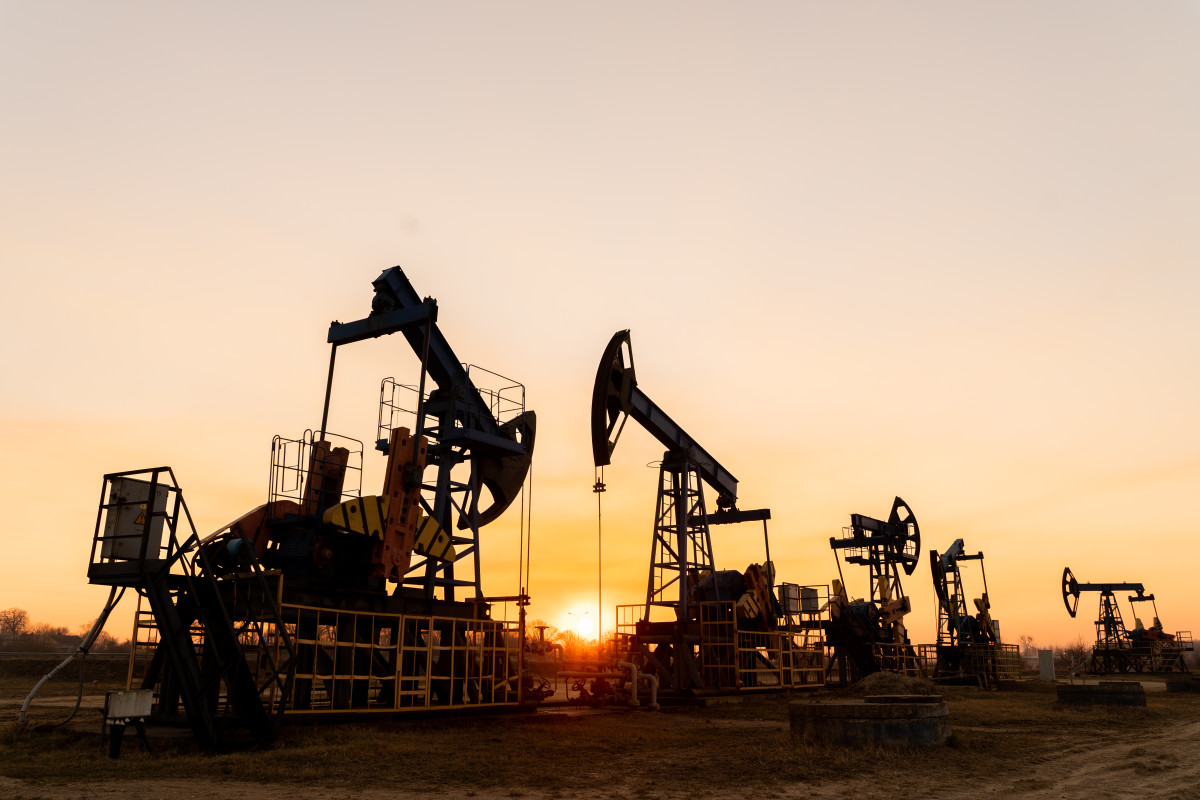
Photo by Olga Rolenko on Getty Images
Opening the Strait of Hormuz is the key to stabilizing oil prices
Iran’s closure of the Strait of Hormuz, through which about 20% of the world’s oil flows, is presenting a big problem for the world’s economy.
Goldman Sachs estimates that oil supply could be low for longer if production potential is further damaged in the war, but OPEC countries could alleviate that by deploying spare capacity.
“Oil prices will likely continue to trend higher while Hormuz flows remain very low,” Goldman Head of Oil Research Daan Struyven and his team said in a note reviewed by TheStreet.
“[There may be] risks to long-term prices from the Iran war beyond uncertainty around the timing of Hormuz reopening, in light of recent strikes on energy infrastructure. Oil supply could be low for longer if production potential is damaged.”
Related: Americans pay at the pump in fastest gas price increase in 20 years
Looking back at history, the firm estimates that the five prior largest supply shocks in the past 50 years yielded an average production hit of 42% after four years, “often due to infrastructure damage and low investment.”
Iran and the seven other Persian Gulf countries produced about 30% of global crude last year, according to Goldman and OPEC, which could deploy its spare capacity should prices really start to get out of control.
“The Hormuz shock and lingering uncertainty may cause faster strategic stock building from 2027 because end-2026 reserves will likely be low and because countries may raise SPR targets,” Goldman says.
Gas prices rise in the largest one-day increase since 2005
Monday, March 2, was the last time crude prices traded rationally as the price of a gallon of petrol jumped 11 cents overnight, rising to $3.11 per gallon on average, per AAA.
The next day, as it became clear that the Iran war wasn’t going to end as quickly as we had been led to believe, prices saw their largest one-day increase since Hurricane Katrina in 2005.
Related: Watch the road: these 5 states have the most irresponsible drivers
Iranian oil is already heavily sanctioned by the U.S, and as of this year, China buys more than 80% of the estimated 1.9 million barrels of crude Iran ships out daily, Reuters reported.
In addition to making the Strait of Hormuz impassable for the majority of cargo ships in the region, Iran has also targeted the oil infrastructure of the Gulf states that house U.S. military bases, where up to 40,000 troops are stationed in the region, according to NPR.
Iran has sent drones and bombs to oil refineries in the United Arab Emirates, Qatar, and Saudi Arabia.
While no one knows how long the current conflict will last, Saul Kavonic, head of energy research at MST Marquee, recently weighed in.
“If the status quo is maintained, where the majority of volumes from the Strait of Hormuz remain unable to flow, then prices are very low compared to the impact that will have on supply, demand of the market,” Kavonic told CNBC.
Every week this conflict continues, about 100 million barrels of crude won’t reach the market, he added. That type of change will inevitably lead to triple-digit prices.
“The disruption creates a dual supply shock: Not only are current exports through the Strait halted, but OPEC+ additional volumes and ultimately most of OPEC’s spare capacity — typically a key lever for balancing the global oil market — are inaccessible while the waterway remains closed,” WoodMac analysts said in a recent note, according to Reuters.
Related: Tesla LiDAR stance accelerates NHTSA investigation into FSD