
Miners mine. They punch or scrape holes in the earth and pull out ores that, ultimately, get turned into something else.
Like gold. Or copper or aluminum, processed from bauxite.
Mining is also a messy business, usually done in remote, difficult environments. And it usually leaves tons of material, discarded as waste. It often pollutes and causes other issues.
In 2014, Freeport McMoRan had to shut its giant Grasberg copper-and-gold project in Indonesia for several months as tensions between the company and indigenous peoples in western New Guinea turned violent. In 2025, the operation was shut down by a mudslide.’
Related: Goldman Sachs resets oil-price bets as war rages on
Persian Gulf tensions stall a project
And sometimes, reality elsewhere forces a breather.
In this case, the company is Barrick Mining Corporation (formerly Barrick Gold), based in Toronto, which has been trying to develop a $7-billion copper-and-gold mine, called Reko Diq, in southwest Pakistan.
The mine is not yet operational, and Barrick (B) is still working on all the reviews to see if the investment will work.
More Gold:
- Gold just saw its biggest decline since 1983: what’s next
- Gold and silver bugs face grim reality check
- Gold’s price is falling fast: Here’s what comes next
And there’s a problem: The mine site is in the Balochistan province, Pakistan’s least populous but still the largest — roughly the size of Germany.
A very tough environment
Balochistan is a harsh, arid locale with a small, very poor population. But the area is rich with minerals, and Barrick’s site is prized as much for its copper potential as its gold. Barrick owns 50% of the project. The remaining 50% is divided among three state-owned companies and the provincial government.
But the area is close to Afghanistan and Iran, neither of which is friendly with the United States or Canada. It’s also just 400 miles to the Persian Gulf.
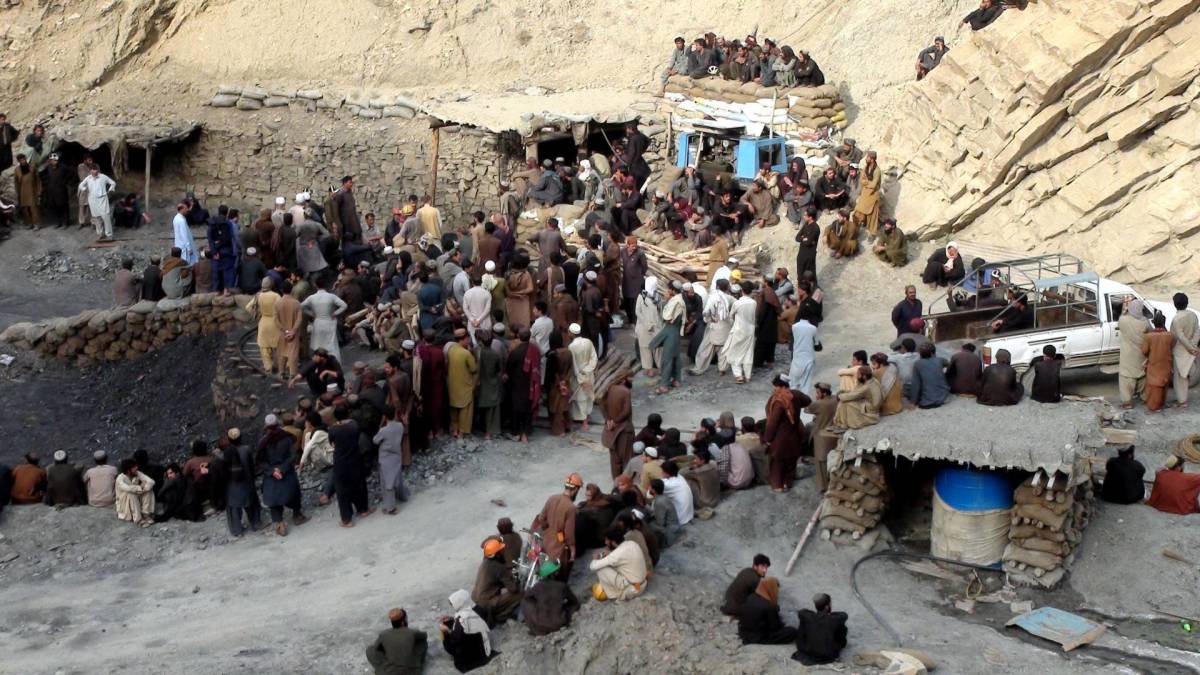
There is a bigger problem, The Financial Times reported. The province “has suffered a brutal insurgency from ethnic Baloch separatist groups motivated in part by a backlash to foreign investors harvesting the region’s rich natural resources.”
STR/AFP via Getty Images
A militant attack in January on more than a dozen locations resulted in more than four dozen deaths. And there’s U.S-Israeli war with Iran boosting tensions as well.
That has forced Toronto-based Barrick to start a review of the entire project. And the company announced on March 26 that it is extending that review for more than a year, until July 2027.
There are corporate tensions at work, too. The project was championed by former CEO Mark Bristow, who left Barrick in the fall of 2025. His successor, Mark Hill, is said to be more cautious.
Plus, Barrick is spinning off its gold assets in Nevada and the Dominican Republic into a separate company, with Goldman Sachs as the lead investment banker.
Barrick is also subject to market forces.
Barrick shares are off 4.4% so far in 2026 and nearly 14% from their peak on Jan. 29. That was the day both gold and silver hit all-time highs.
Related: Market tumble sends investors scrambling: Here’s what to do now